

If someone has ever pressed a heavy piece of metal into your palm during a handshake, you’ve received a challenge coin. If you’ve ever slammed one on a bar and watched everyone scramble for their pockets, you’ve issued a coin check. And if you’ve ever held a coin that carried the insignia of a unit you bled with, you already know it’s more than a piece of metal.
But if you’re new to the tradition, whether you’ve just been handed your first coin, you’re planning to order one for your unit, or you’re simply curious, this guide covers everything you need to know: what challenge coins are, where they came from, how they’re used today, and what separates a coin worth carrying from one that ends up in a junk drawer.
What Is a Challenge Coin?
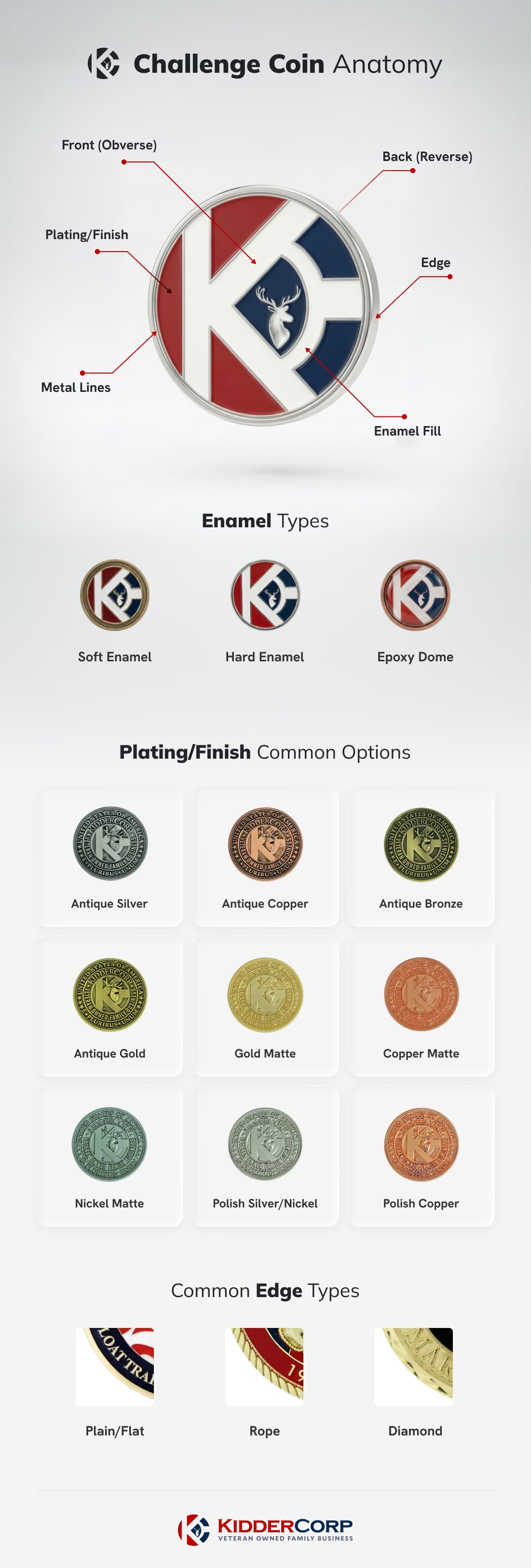
A challenge coin is a small metal coin or medallion, typically 1.75 to 2 inches in diameter, bearing the insignia, emblem, or motto of a specific organization. They are carried by members of that organization as proof of membership, a mark of achievement, or a reminder of shared experience.
Most challenge coins are made from solid brass or zinc alloy, weigh noticeably more than a standard currency coin, and feature custom artwork on both sides. They come in a range of finishes (polished gold, antique bronze, black nickel) and can include colored enamel, 3D sculpted elements, custom shapes, and edge engravings.
Challenge coins are not currency. They have no monetary face value. Their value is entirely in what they represent: the unit, the mission, the moment, or the person who handed it to you.
Where Did Challenge Coins Come From?
The exact origin of the challenge coin is debated, and depending on who you ask, you’ll get a different story. Three theories dominate.
The most popular traces back to World War I, when a wealthy Army Air Corps lieutenant had bronze medallions struck with his squadron’s insignia. One of his pilots was later shot down, captured, and stripped of all identification. The medallion around his neck was the only thing left. When he escaped to a French outpost, that medallion saved his life by proving he wasn’t a German spy.
The second theory involves OSS operatives in World War II who used specific coins to verify each other’s identities during clandestine meetings in occupied France. Flip the right coin on the table, and the meeting was safe.
The third, and arguably the most likely origin of the modern coin check, comes from Vietnam. Special Forces soldiers carried “lucky bullets” as a ritual. At the bar, you’d be challenged to produce yours. If you couldn’t, you bought the round. Over time, live ammunition in a bar became a problem (for obvious reasons), and the bullet was replaced by a coin bearing the unit crest.
Regardless of which story you believe, the result is the same. What started as a way to prove identity behind enemy lines evolved into the military’s most enduring tradition of recognition and camaraderie.
We wrote a full deep dive on each of these origin stories here: The History of Challenge Coins: WWI Pilots, Vietnam Bars, and the Bullet Club.
How Are Challenge Coins Used Today?
Challenge coins started in the military, but the tradition has spread far beyond the barracks. Here’s how they’re used across different communities.
Military
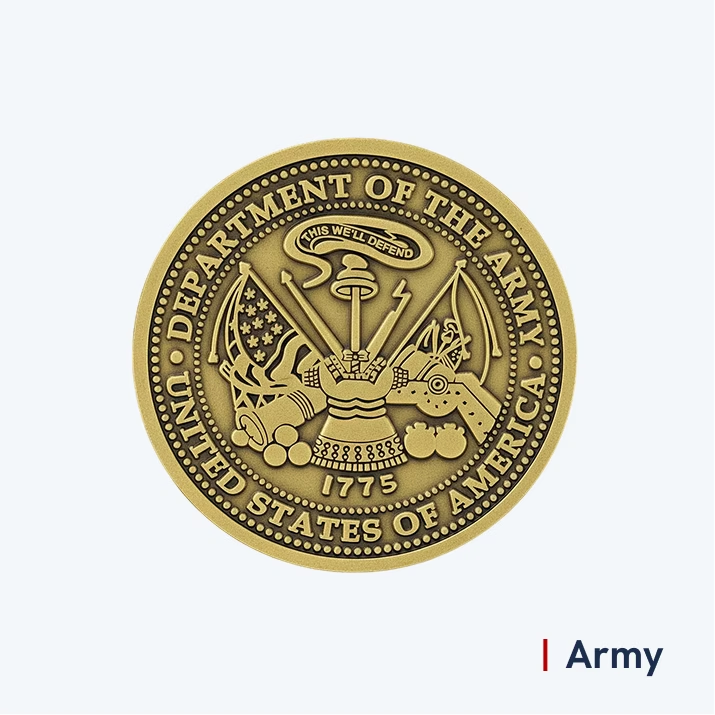
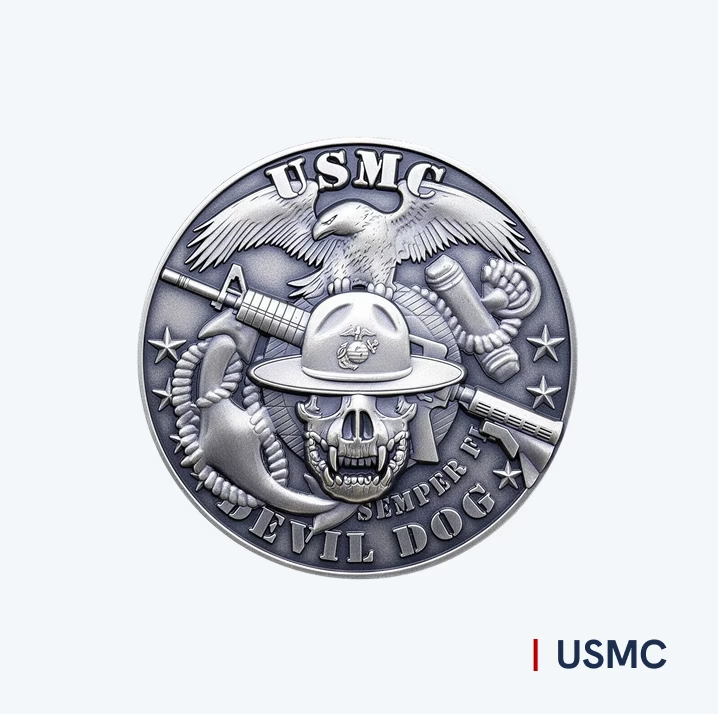
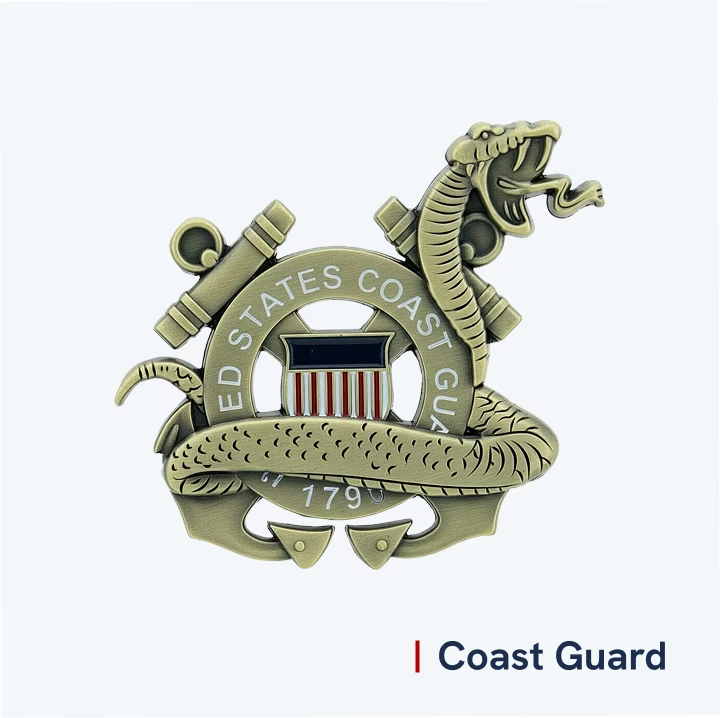
This is where the tradition runs deepest. Every branch of the US military uses challenge coins to recognize service, mark deployments, build unit cohesion, and honor milestones like promotions, retirements, and changes of command.
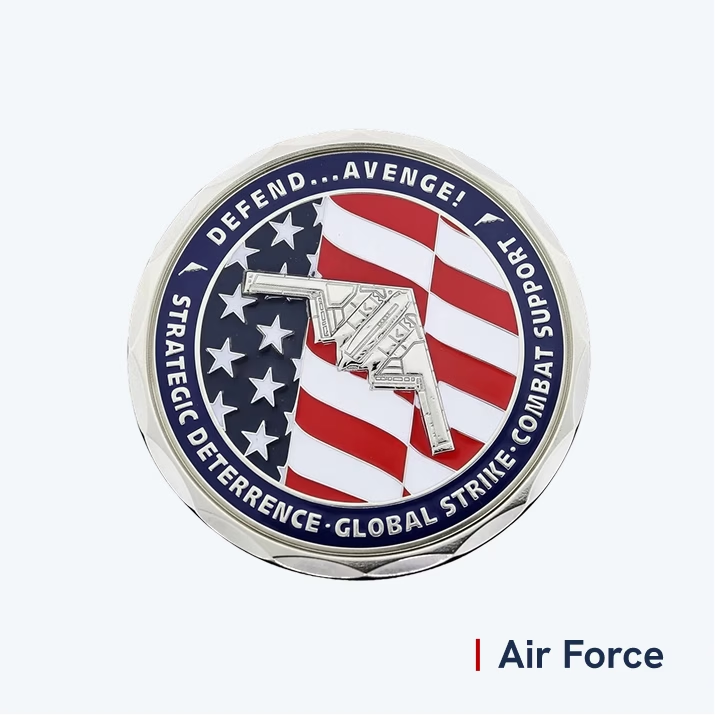
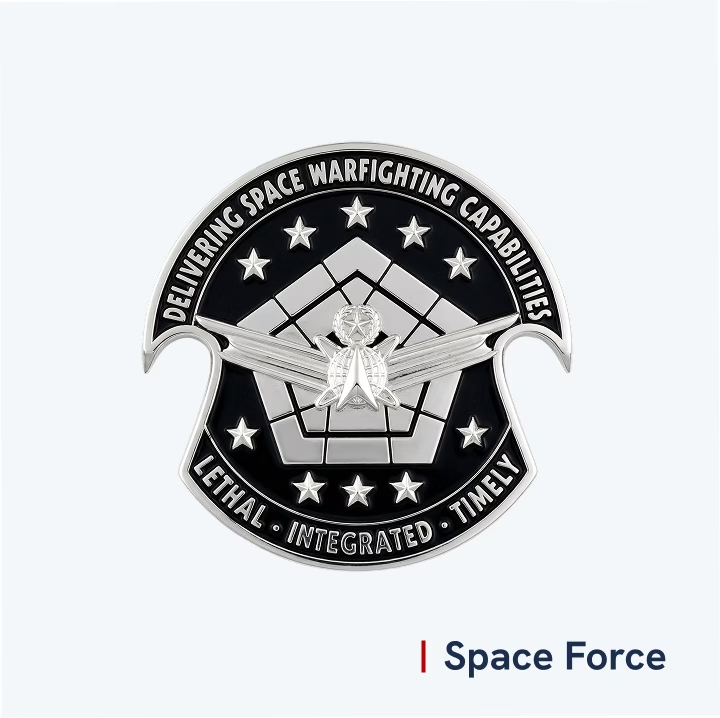
Each branch has its own coin culture. In the Navy, coins are deeply tied to ship life, the Chief Petty Officer community, and traditions like the Shellback ceremony. The Marine Corps treats the coin as an extension of its discipline: heavy, sharp, and earned. Army coins often center on the Distinctive Unit Insignia and are the most common “impact award” for on-the-spot recognition. Air Force coins tend to push design boundaries with aircraft-shaped cutouts and modern finishes. And in the Coast Guard, coins frequently commemorate specific cutters, rescue missions, and drug interdiction operations.
Commanders at every level carry their own coins and present them to service members who go above and beyond. Receiving a coin from a senior leader, especially through the traditional “secret handshake” pass, is considered a genuine honor.

Law Enforcement and First Responders
Police departments, fire departments, and EMS agencies have adopted the challenge coin tradition to honor bravery, commemorate fallen officers, and build brotherhood within their ranks. Department coins often feature the agency badge, patron saints, or unit-specific imagery. SWAT teams, K-9 units, and narcotics divisions frequently have their own coins as well.
Corporate and Organizations
Companies are increasingly using challenge coins as alternatives to generic awards and certificates. They work as executive gifts, employee recognition tools, event keepsakes, and even high-end business cards that never get thrown away. Tech companies, sales teams, and nonprofits have all found uses for custom challenge coins.
Personal and Memorial
Some of the most meaningful coins aren’t tied to any organization at all. Families commission memorial coins to honor a loved one’s service. Reunion groups create coins to commemorate gatherings of veterans who served together decades ago. These coins often carry the most emotional weight because they exist for a single, specific purpose.
The Coin Check
The coin check is the tradition that keeps the challenge coin alive in everyday life. The rules are simple: someone initiates a challenge by pulling out their coin and slamming it on the table (or any hard surface that makes an audible sound). Everyone present has to produce their coin immediately. If you can’t, you’re buying the next round. If everyone produces theirs, the challenger buys.
The standard rule is “one step and a reach.” You have to be able to get to your coin without leaving the area. Running to your car or digging through a bag across the room means you failed.
A few things that don’t count: a quarter, a poker chip, a photo of your coin on your phone. It has to be the real thing.
The coin check varies slightly from unit to unit and branch to branch, but the core principle is universal. Carry your coin or pay the price. We covered the full rules, etiquette, and common traps in our complete guide: The Rules of the Coin Check: Protocol You Need to Know.
What Makes a Quality Challenge Coin?
This is where most guides stop, but it’s arguably the most important part if you’re planning to order coins for your unit, department, or organization. Not all challenge coins are created equal, and the difference between a coin that gets carried daily and one that gets tossed in a drawer comes down to a few key factors.
Weight
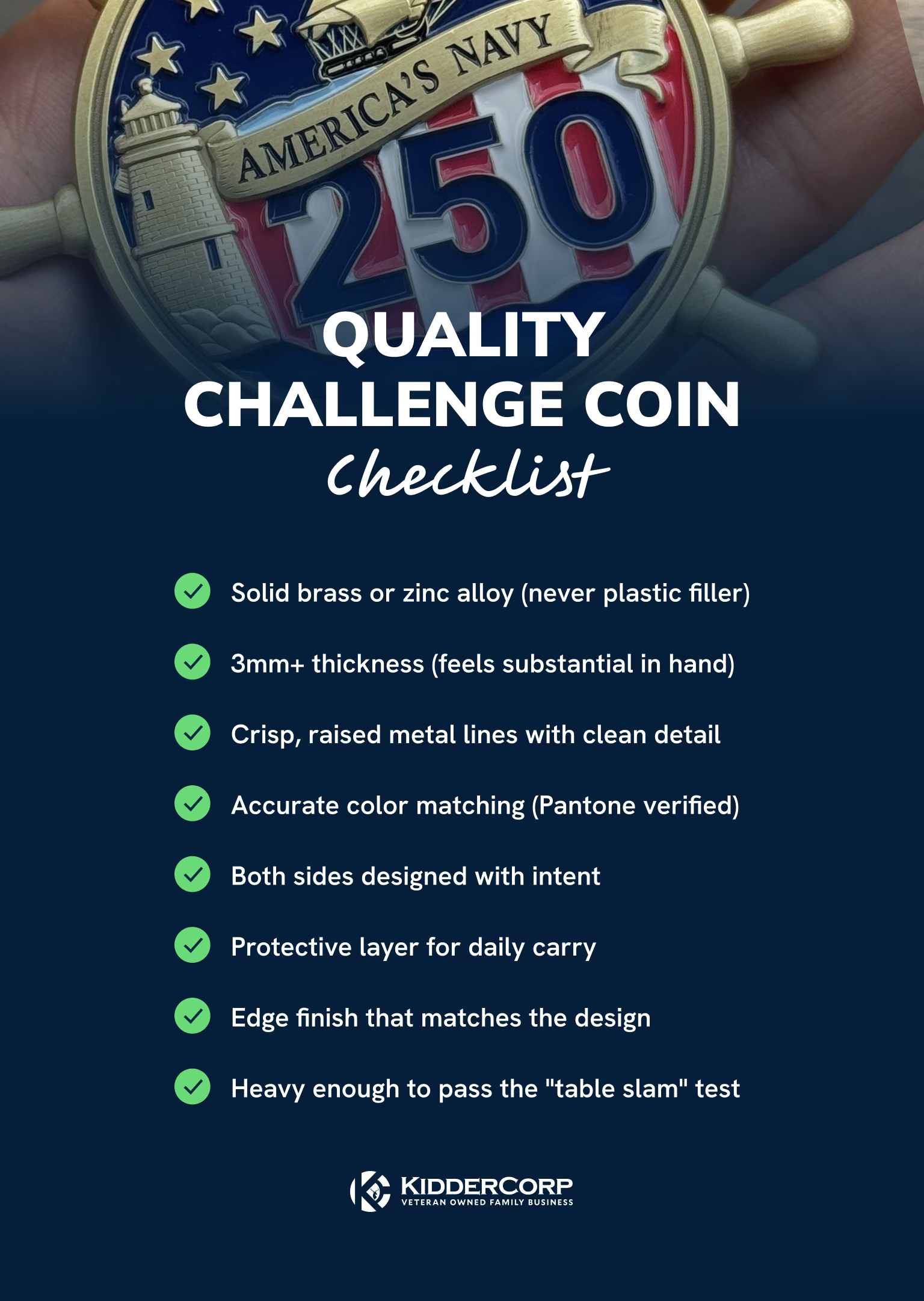
Pick up a quality challenge coin and you feel it immediately. A coin made from solid brass has a density and heft that commands respect. Cheap coins use thin metal or lightweight alloys that feel hollow when they hit the table. If your coin doesn’t make a satisfying sound during a coin check, it’s not doing its job.
The standard military coin is 1.75 inches in diameter at roughly 3mm thick, but the trend is moving toward 2-inch coins at 3.5 to 4mm thickness, especially for commander’s coins and chief’s mess coins. Bigger canvas, more weight, more presence. For a full breakdown of sizes and when to go bigger, see our complete size guide.
Enamel and Finish
The two main enamel types are soft enamel and hard enamel. Soft enamel leaves the metal lines raised so you can feel the texture of the design with your thumb. Hard enamel is polished flat for a smooth, jewelry-like surface. Neither is “better,” they just serve different aesthetics. About 90% of military coins use soft enamel because it gives dimension to unit crests and rank insignia. We break down the full comparison here: Soft Enamel vs. Hard Enamel: Which is Right for Your Challenge Coin?
The metal finish sets the overall character. Polished gold or silver gives a clean, dress-uniform look. Antique finishes (bronze, copper, nickel) add a rugged, weathered depth that highlights 3D details. Black nickel is popular for stealth and cyber units. Dual plating combines two finishes on one coin for a premium, two-tone effect.
Design and Detail
A great coin tells a story on both sides. The front typically carries the unit insignia or organization logo. The back carries a motto, mission statement, or supporting imagery. The best coins use every element intentionally: edge type (plain, rope, or crosshatch), shape (round, shield, dog tag, or fully custom cutouts), and even edge engraving for serial numbers or mottos.
The difference between a forgettable coin and a collectible one usually comes down to whether the design was rushed or whether someone took the time to get the heraldry, colors, and proportions right.
Protection
Coins that are carried daily take a beating. Keys, knives, pocket wear, and salt air (especially in the Navy and Coast Guard) all degrade unprotected enamel over time. An epoxy dome, a clear resin coating applied over the surface, adds a glass-like layer that protects the paint and metal underneath. It also gives the coin a smooth, polished feel regardless of the enamel type beneath it.
How Custom Challenge Coins Are Made
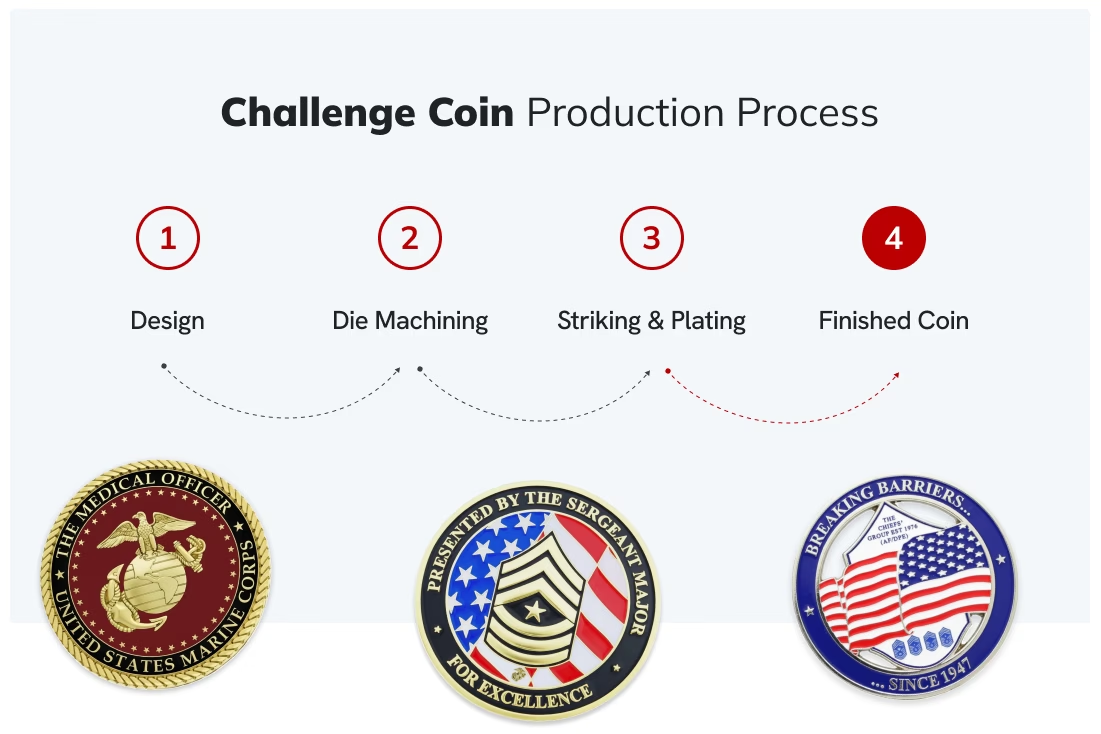
The process from idea to finished coin is straightforward, but each step matters.
It starts with the design. You provide your concept, whether that’s a polished vector file, a rough sketch on a napkin, or just a description of what you want. A designer turns that into production-ready artwork showing both sides of the coin with exact colors, finishes, and dimensions.
Once the artwork is approved, a steel die (mold) is machined to stamp your design into raw metal. This is a one-time setup. The die is used to strike each coin from solid brass or zinc blanks, pressing your design into the metal with enough force to create crisp, raised detail.
After striking, the coins go through plating (gold, silver, bronze, black nickel, or dual combinations), then enamel is applied by hand into the recessed areas. If an epoxy dome is requested, a clear resin layer is added and cured over the surface. Each coin is inspected before packaging.
The typical turnaround from approved artwork to delivery is 3 to 5 weeks depending on complexity and quantity. Simple designs on standard shapes move faster. Custom shapes, 3D sculpting, and specialty finishes take longer because of the additional tooling involved.
Ready to Create Your Own Challenge Coin?
Whether you’re a unit commander planning a deployment coin, a chief building coins for the mess, a department head recognizing your team, or a family honoring someone’s service, a well-made challenge coin carries weight that lasts far longer than the moment it’s handed over.
At KidderCorp, we’ve been designing and manufacturing custom challenge coins since 2005. We’re a veteran-owned family business, and we understand what these coins mean to the people who carry them.
Tell us your idea. We’ll handle the rest.


