
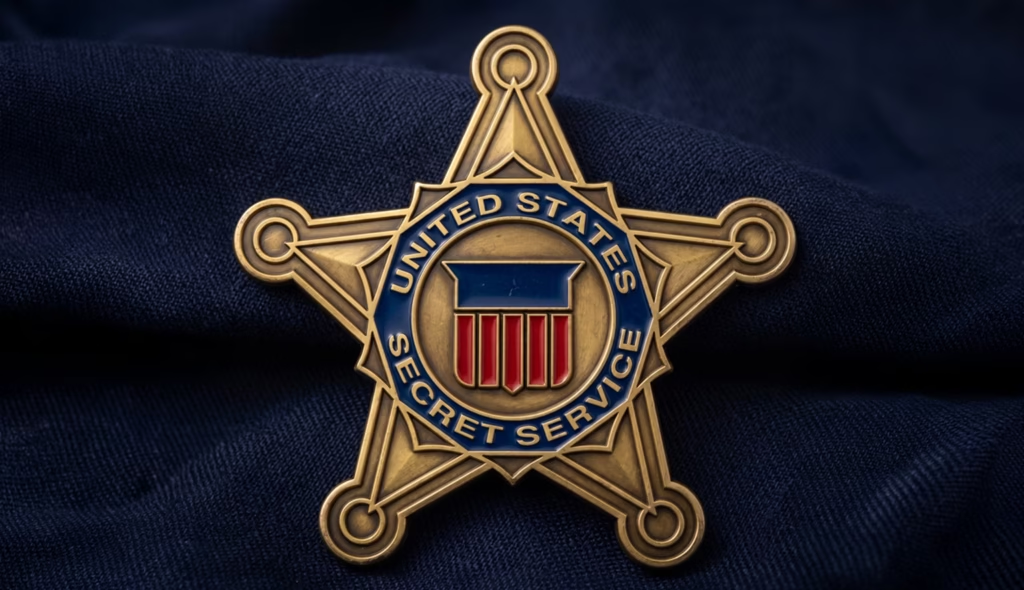
There is a quiet irony at the center of the Secret Service, and it lives in metal.
The agency was founded in 1865 to hunt counterfeit money. Its first and only job, for decades, was protecting American currency from people making fake coins and fake bills. So there is something fitting, and a little funny, about the fact that the same agency now runs one of the most respected challenge coin cultures in federal law enforcement. An outfit built to stop fake coins makes some of the best real ones you will never be allowed to buy.
This is a look at that culture. Where it came from, the kinds of coins that get made, what the designs actually mean, and a few of the stories that turned certain coins into legends. We will also walk through the craft side, since that is the part we know best, and the legal lines any honest coin maker stays well behind.
An agency built on coins, guarding a president
The Secret Service has carried a split identity from the start. One half investigates financial crime. The other half protects the president, the vice president, their families, and visiting heads of state. The protective mission, the one most people picture, did not actually arrive until 1901, after President William McKinley was assassinated and Congress handed the job to the only federal investigative force it had. In 2003 the agency left the Treasury Department and joined the new Department of Homeland Security.
Somewhere in all of that, the challenge coin tradition took root, the same way it has in nearly every corner of the military and federal law enforcement. Inside the Service, a coin is recognition you can hold. It marks a detail you stood, a mission that ended clean, a director who wanted to say thank you in a way that outlasts a memo.
The most respected way to receive one is still the handshake pass. A senior agent or a detail leader palms the coin, shakes your hand after a brutal fourteen-hour shift, and you feel the weight transfer without a word said. Off duty, the old coin check survives too. Get challenged at a bar and fail to produce your coin, and you are buying the round. For an agency that prides itself on being made of quiet professionals, that is about as loud as the praise gets.
The hierarchy, from the director’s coin to the gift shop
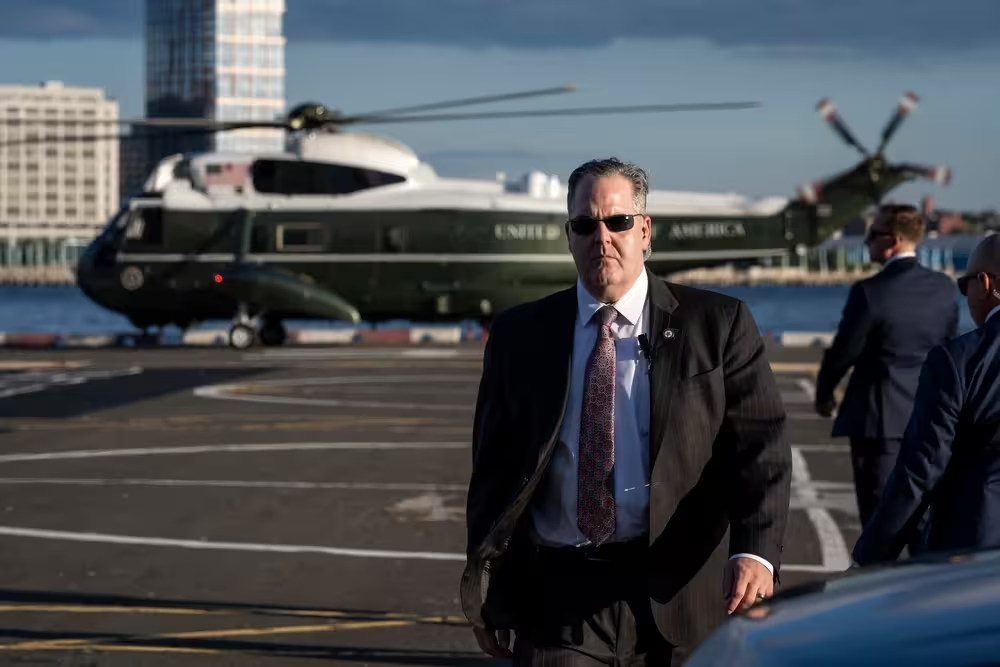
Not all Secret Service coins are equal, and the people who carry them know exactly where each one sits.
At the top are the director’s coins, funded by the agency or the director’s own discretionary budget and handed out for genuine acts of merit. Low mintage, high meaning. Below those sit the coins everyone outside the agency wants: the Presidential and Vice Presidential Protective Division coins, carried by the agents who actually stand the details. These tend to feature the White House, the presidential seal, the armored limousine agents nicknamed “The Beast,” all anchored by the agency star. True PPD coins are not souvenirs. You serve the detail or you do not get one.
Then there are the tactical coins, and they look the part. The Counter Assault Team and the Counter Sniper Team exist to win a gunfight, and their coins drop the gold and ceremony for black nickel, matte finishes, and subdued line work. The look is the point. A reflective coin is a liability for people whose whole job is to not be seen until they are needed. These are genuinely rare, because the teams themselves are small.
Further down the everyday ranks are Uniformed Division coins, which lean on the shield badge those officers wear rather than the five-point star of the special agents. And then field office coins, which are quietly the most fun in the whole catalog. Each field office makes its own, and they tend to blend the seriousness of the mission with local personality. The San Diego office famously put surfboards, palm trees, and a “Stay Classy” Anchorman joke on theirs. Somewhere a deadly serious federal mandate and a Will Ferrell movie shook hands.
Finally there are the commercial replicas, the ones you can actually buy. Plenty of private mints make Secret Service themed coins for collectors and veterans, and some are very well made. What they cannot give you is provenance. A coin you bought online and a coin pressed into your palm on the tarmac next to Air Force One are different objects, even if they look the same.
What the designs actually mean
Secret Service coins lean on a small, consistent visual language, and most of it traces back to the badge.
The five-point Secret Service star is the heart of nearly every design. It is not just decoration. Each of its five points stands for one of the agency’s core values: justice, duty, courage, honesty, loyalty. The badge dates back to the 1870s, and on a good coin the star is struck in high three-dimensional relief so it catches light the way a real pocket commission does.
After the 2003 move to Homeland Security, the eagle started showing up more often, tying the agency into the broader national security picture. And almost every coin carries the official motto somewhere on its face: “Worthy of Trust and Confidence.” It is a heavy phrase for people who guard both the financial system and the life of the president, which is exactly the point.
You will also spot Latin from time to time, and one more detail that rewards a close look. Where U.S. currency often carries the Roman numerals for 1776, Secret Service coins almost always carry 1865, the year the agency was born. A small, permanent nod to where it all started, back in the counterfeiting unit.
A few coins with stories
Because agents usually pay for these coins out of their own pockets, the coins end up being honest in a way official communications never are. A couple have become small legends.
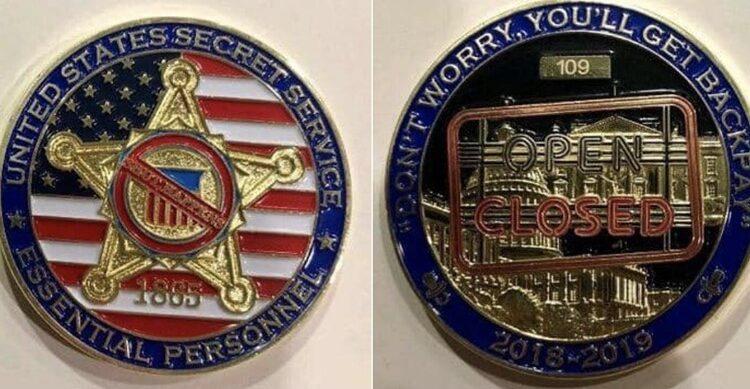
During the long government shutdown that ran from late 2018 into early 2019, thousands of agents were ordered to keep working, and traveling, and protecting people, without pay. Morale did what you would expect. In response, agents privately funded a coin. One side read “Essential Personnel.” The other read, with the flat humor that only comes from real frustration, “Don’t worry, you’ll get backpay.” Photos leaked, the press ran with it, and the coin became a perfect little artifact of how a workforce feels when it is taken for granted. Nobody could censor it, because no taxpayer money paid for it.
There is also the rare “Bottom of the Barrel 305” coin, which surfaced as pointed commentary on agency management during a particular era. It is the kind of object that proves these coins are not corporate swag. They are made by people, sometimes happy ones and sometimes not, and they say what those people actually think.
A maker’s-eye view of the craft
This is the part we pay closest attention to, because the Secret Service of all agencies has metal in its blood. An outfit that spent its early decades studying fakes tends to notice when a coin is well struck and when it is not.
A serious law enforcement coin starts with weight. Heavy brass or solid copper, struck under real tonnage so the details come out crisp. That matters most on the star, where the sharp facets only read correctly if the coin is made with proper three-dimensional dies rather than flat stamping. For ceremonial pieces, the gold standard for color is cloisonné, also called hard enamel. The recessed areas get hand filled with a glass-based paste, fired hot, then ground and polished flat into a smooth, jewelry-grade finish that does not fade. It is slow and it is expensive, and it is the difference between a coin that looks good now and one that still looks good in thirty years.
Tactical coins go the other direction on purpose. Black nickel, antique silver, muted greys, no shine. And the best unit coins often borrow a trick or two from the very currency the agency protects: incused edge lettering, laser-engraved serial numbers, dual plating that is a genuine headache to copy. Serial numbers pull double duty. They cap the run so the coin stays rare, and they give the unit a clean record of who holds which number.
The line a good maker won’t cross
Here is the honest part, worth saying plainly because not every vendor will.
There are real federal laws around this insignia. One statute protects official federal badges from being reproduced one to one and sold to the public, because the badge is exactly what an impersonator would want. Another protects the agency’s name, so you cannot stamp “Official Secret Service” on merchandise and sell it in a way that implies the agency signed off, not without written permission from the director. A blog like this one can absolutely show and discuss these coins for history and education. What a reputable maker will not do is mass produce exact badge replicas for retail, or pretend a custom coin carries a federal endorsement it does not have.
That is not a disclaimer. It is just how you stay on the right side of the people whose entire founding mission was catching the folks who do not.
The same idea, in your hands
Strip away the secrecy and the star, and a Secret Service coin is reaching for the same thing every good coin reaches for. A well-made object, given by hand, by someone whose recognition means something, marking a moment that was earned. Most people will never stand a protective detail or shake a hand with a director’s coin hidden in it. That is alright. The tradition scales down cleanly, which is the whole point of it.
If you liked this, our presidential challenge coin post covers the coins one rung up the ladder, and the two make a natural pair. We build coins for police departments and federal law enforcement the same careful way. And if your own unit, department, or team has a moment worth putting in metal, that is exactly the kind of thing we make, the right way, every time.


