
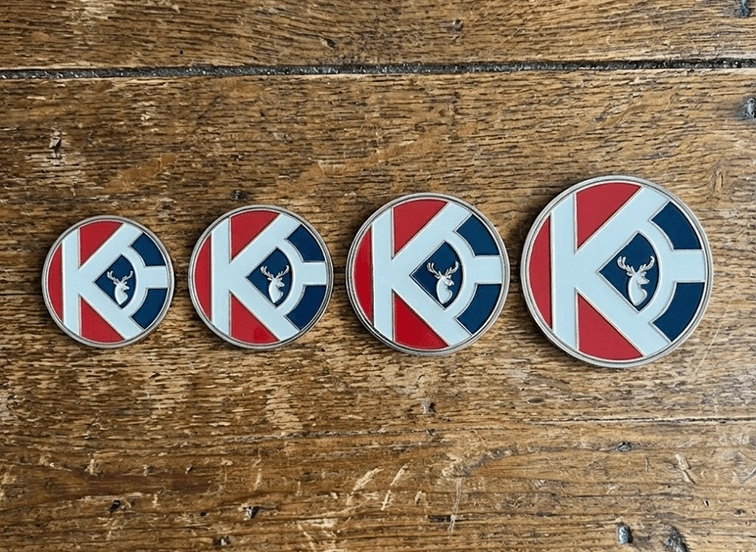
Size matters.
It’s one of the first questions we ask every client at KidderCorp: “How big do you want your coin?”
If you go too small, your unit creed becomes unreadable and your 3D mascot looks like a blob. If you go too big, it becomes a paperweight that doesn’t fit in a wallet.
While the industry standard is 1.75 inches, the trend in the military is shifting toward larger, heavier coins. This guide breaks down the pros, cons, and best uses for every standard diameter so you can choose the right canvas for your design.
1.50 Inches: The Traditional Choice
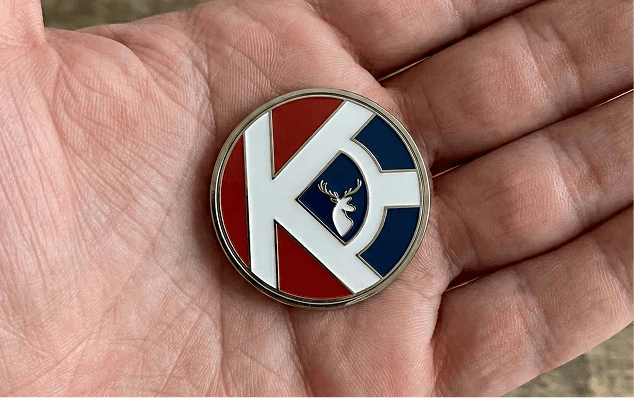
Before the early 2000s, 1.50″ was the standard size for almost all military coins. Today, it is considered “small,” but it still has a specific place in the market.
- The Feel: It feels similar to a silver dollar. It is light, unobtrusive, and easy to carry in a coin pocket.
- Best Use: This size is perfect for lapel pins, budget-friendly handouts, or generic “thank you” tokens. It works best with very simple logos (like a rank insignia or a basic crest) and minimal text.
- The Limitation: We do not recommend this size if you want 3D sculpting or a list of names. There simply isn’t enough surface area for the detail.
1.75 Inches: The Gold Standard
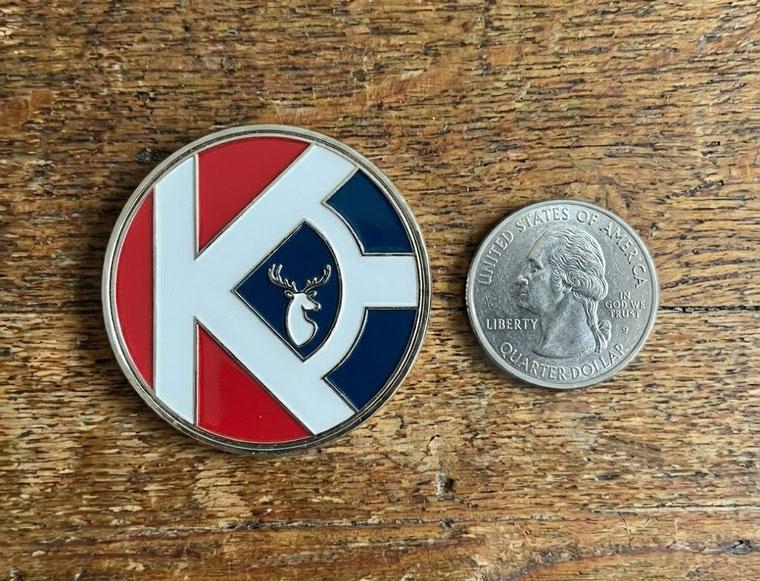
This is the “Standard Challenge Coin.” If you buy a coin off the rack at the Exchange or find one in a geocache, it is likely 1.75 inches.
- Why it’s the default: It strikes the perfect balance. It is large enough to show legible text and detailed enamel work, but small enough to fit comfortably in a wallet or pocket for an everyday carry (EDC).
- The Feel: Substantial without being bulky. It fits perfectly in the palm for a covert handshake.
- Best Use: Unit coins, deployment commemoratives, and trading coins.
2.00 Inches: The New Heavyweight

In the last five years, we have seen a massive shift toward 2-inch coins, especially for Commanders and Chiefs.
- The Benefit: That extra quarter-inch might sound small, but it increases the surface area significantly. This allows for 3D sculpting (like faces, ships, or aircraft) that looks realistic rather than cramped.
- The “Thud” Factor: A 2-inch coin is noticeably heavier. When you slam it on a bar, it makes a louder sound than a standard coin. It feels more “valuable” to the recipient.
- Best Use: Commander’s Coins of Excellence, CPO Mess coins, and intricate 3D designs.
2.25 Inches to 3.00 Inches: The Statement Pieces
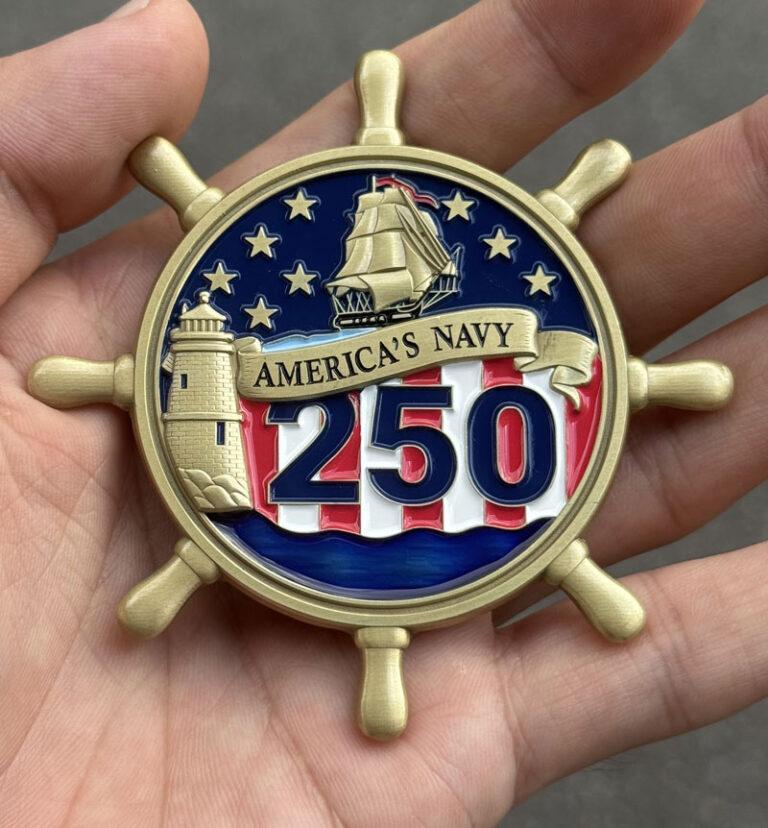
Once you go above 2 inches, you are leaving “pocket coin” territory and entering “desk display” territory.
- The Use Case: These are rarely carried daily. They are awarded as retirement gifts, major awards, or sold as fundraisers.
- Visual Impact: This size is perfect for “Cutout” shapes. If you want a coin shaped like the outline of an F-35 or an Aircraft Carrier, you need this length to ensure the metal isn’t too thin or fragile.
- Best Use: Bottle openers (you need the leverage), unique shapes, and commemorative desk pieces.
Thickness Matters (Don’t Ignore This)
Diameter isn’t the only dimension that counts. A common mistake is ordering a large coin (2.5″) with a standard thickness (3mm). It ends up feeling cheap and wafer-thin, like a pog.
At KidderCorp, we recommend scaling your thickness to match the size:
- 1.50″ – 1.75″: Standard 3mm thickness is perfect.
- 2.00″ – 2.50″: Upgrade to 3.5mm or 4mm.
- 3.00″+: We often recommend 4mm to 6mm.
Adding thickness gives the coin “heft” and allows for deeper 3D relief, making the artwork pop off the metal. If you want that deep 3D relief, you should check out our guide on Soft Enamel vs. Hard Enamel.
Quick Reference: What Fits?
| Coin Size | Fits In Wallet? | Text Legibility | Best For |
| 1.50″ | Yes | Low (Short words only) | Pins, Budget Tokens |
| 1.75″ | Yes | Good | Standard Unit Coin |
| 2.00″ | Tight | Excellent | Commander / Chief |
| 2.50″+ | No | Maximum | Desk Display / Shapes |
Summary: Choosing the Right Size
There is no “wrong” size, but there is a “right” size for your specific design.
- Text Heavy? Go 2.00″ minimum. If you have a creed, a list of names, or a long quote, 1.75″ will force the font to be microscopic.
- 3D Faces/Vehicles? Go 2.00″. 3D detailing requires surface area to look realistic.
- Budget Conscious? Stick to 1.75″. It uses less brass and fits standard molds.
Not sure if your design will fit on a 1.75″ coin? Send us your sketch. Our artists will scale it and tell you the exact minimum size needed for legibility – before you spend a dime.


