
How Much Do Custom Challenge Coins Cost? Real Pricing Breakdown for 2026
If you’ve spent ten minutes searching for challenge coin pricing, you’ve probably seen numbers all over the map. One site says coins start at $0.64 each. Another quotes $2.33. Another says $4 to $10. None of them tell you what you’ll actually pay.
The honest answer is this. For a typical 1.75″ round coin in soft enamel, expect to pay around $11.50 per coin for 50 coins, dropping to about $7.75 per coin for 100 coins. Those are real numbers from a quality manufacturer, not “starting at” bait pricing designed to get you to fill out a form.
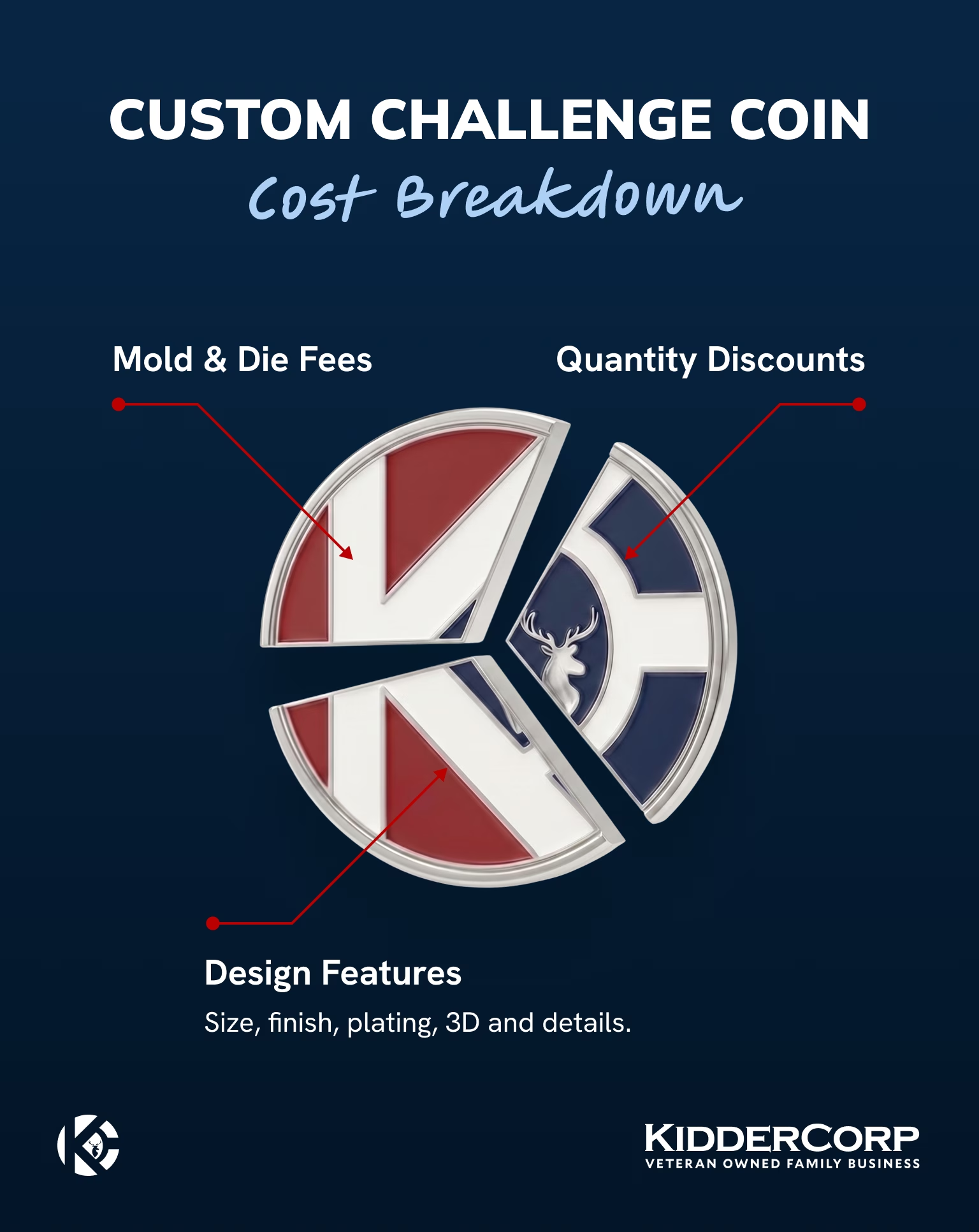
Per-coin pricing drops as quantity goes up. There’s a one-time die fee for new designs. Specialty options like 3D sculpting, dual plating, or edge engraving add to the cost. The variables are predictable once you understand them.
This guide walks through what custom challenge coins actually cost, what drives the price up or down, and how to estimate the total budget for your specific order.
The Quick Answer
For most buyers, here’s what to expect.
A typical 1.75″ round coin in soft enamel costs:
- 50 coins: around $11.50 each, or about $575 total
- 100 coins: around $7.75 each, or about $775 total
A typical 2″ round coin in soft enamel costs:
- 50 coins: around $13.50 each, or about $675 total
- 100 coins: around $8.10 each, or about $810 total
These numbers cover a standard 2D design with soft enamel and a basic plating finish. Add a one-time die fee for new designs (more on that below). Premium options like 3D sculpting, dual plating, edge engraving, and epoxy dome coating add to the cost.
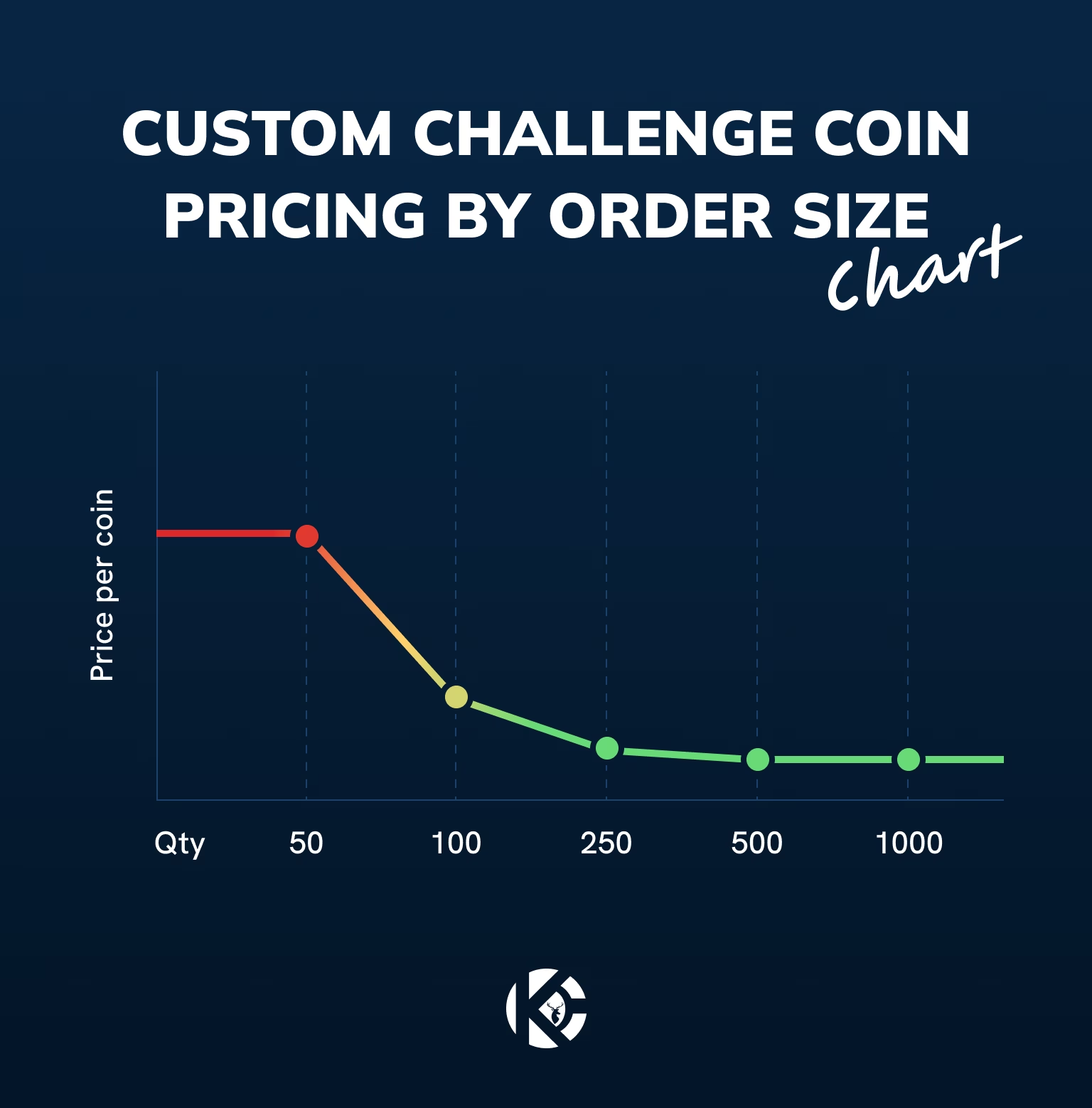
Quantity is the biggest factor in per-coin pricing. The more coins you order, the lower the per-unit cost, because the fixed setup costs spread across more pieces. Below 50 coins, per-unit pricing climbs steeply. Above 100, it continues to drop.
Pricing is subject to change based on material costs and current trade tariffs, which have been in flux. The numbers above reflect typical pricing in early 2026.
What Actually Drives the Price
If you’ve gotten quotes from multiple manufacturers and they came back wildly different, it’s usually because of one or more of these variables. Understanding them helps you control your budget and explain pricing differences when comparing quotes.
Quantity
This is the biggest single driver of per-coin pricing. The fixed setup costs, including artwork, die creation, and production runs, get spread across however many coins you order. At 50 coins, those fixed costs land on a small base. At 500 coins, the same costs distribute across ten times as many pieces, dropping the per-unit price significantly.
This is why ordering 50 coins instead of 100 can feel disproportionately expensive. The work behind the order is roughly the same. You’re just paying more per piece because there are fewer pieces to absorb the setup.
Size
Larger coins cost more per unit because they use more material and require larger dies. A 1.5″ coin uses noticeably less brass or zinc alloy than a 2″ coin, and the bigger the coin, the more enamel and plating goes into each piece. For most military and unit applications, 1.75″ is the sweet spot. For commander’s coins, retirement pieces, or large presentation coins, 2″ or larger makes sense. See our guide to challenge coin sizes if you’re trying to decide.
Design Complexity
Simple two-color designs with clean metal lines cost less than complex multi-color designs with fine detail. The complexity affects three things: the time to create production-ready artwork, the difficulty of the die machining, and the time to apply enamel cleanly. A coin with eight enamel colors, intricate insignia, and tight metal lines takes longer to produce than a coin with two colors and bold shapes.
2D vs 3D
Standard coins are 2D, meaning the design sits in flat relief with raised metal lines separating the colored areas. 3D coins have sculpted elements where portions of the design are raised in true three-dimensional form, like a ship, an aircraft, or a unit mascot. 3D requires significantly more tooling work and adds noticeably to per-coin cost. The result is more dramatic, but it’s a real upgrade rather than a simple option.
Plating Choices
Standard polished plating in gold, silver, or copper is included in base pricing. Antique finishes (bronze, copper, nickel) and specialty options like black nickel are sometimes priced the same. Where pricing climbs is with dual plating, where two different finishes appear on a single coin. Dual plating requires additional production steps and adds to the per-coin cost.
Add-Ons and Specialty Options
A handful of optional features can change the final number meaningfully:
- Edge engraving. Text, serial numbers, or dates engraved into the coin’s edge.
- Epoxy dome coating. Clear protective resin over the surface, either as a thick dome or thin coat.
- Custom shapes. Anything other than a standard round, oval, or shield shape requires custom tooling.
- Cutouts. Sections of the coin removed entirely, like the negative space in a logo.
- Sequential numbering. Each coin individually numbered, useful for limited-run commemorative pieces.
- Specialty packaging. Velvet boxes, acrylic display cases, or custom presentation packaging.
Most of these add a small amount per coin. Combined, they can add up. None of them are necessary for a quality coin, but they each have a real place depending on what the coin is for.
For a deeper look at how the materials and finishes work together, see our guide to what challenge coins are made of.
Real Pricing Examples by Quantity
Most pricing articles give you one or two data points and call it done. Here’s a fuller picture of what custom challenge coins actually cost across the most common order sizes.
The numbers below cover a typical 2D round coin with soft enamel and standard plating. They reflect realistic market pricing in early 2026.
1.75″ Round Coin (most common military size)
| Quantity | Per Coin | Total |
|---|---|---|
| 50 | ~$11.50 | ~$575 |
| 100 | ~$7.75 | ~$775 |
| 250 | ~$5.50 | ~$1,375 |
| 500 | ~$4.25 | ~$2,125 |
| 1,000 | ~$3.50 | ~$3,500 |
2″ Round Coin (commander’s and presentation size)
| Quantity | Per Coin | Total |
|---|---|---|
| 50 | ~$13.50 | ~$675 |
| 100 | ~$8.10 | ~$810 |
| 250 | ~$5.75 | ~$1,440 |
| 500 | ~$4.50 | ~$2,250 |
| 1,000 | ~$3.75 | ~$3,750 |
A few things worth noting from these numbers.
Per-coin pricing drops sharply between 50 and 100 coins. That’s the steepest part of the curve. If your minimum useful quantity is 50 but your budget allows for 100, ordering the larger run nearly doubles the coins for less than a 50% increase in total cost. Many units that order 50 end up wishing they’d ordered 100, because once the coins are in pockets, demand grows.
Above 250 coins, per-unit pricing flattens. The economy of scale benefit is real but smaller. Going from 500 to 1,000 cuts per-coin cost by maybe 15-20%, not 50%. If you’re trying to decide between 500 and 1,000, base the decision on actual demand rather than chasing a per-unit discount that may leave you with extras you don’t need.
What these numbers don’t include:
- A one-time die fee for new designs (covered in the next section)
- Premium options like 3D sculpting, dual plating, or edge engraving
- Specialty packaging
- Shipping, which most manufacturers calculate separately
Pricing reflects current market conditions and is subject to change based on material costs and trade tariffs, which have moved noticeably in 2026. Always confirm pricing with a current quote before placing an order.
The Die Fee Explained
Almost every pricing article mentions a die fee in passing, but few explain what it is or why you pay it. Here’s the straightforward version.
What it is. A die is a hardened steel mold cut to the exact specifications of your design. It’s the tool used to stamp your artwork into each blank coin during production. Every unique coin design requires its own die.
Why it exists. The die has to be machined from raw steel, which is precision work. The labor and materials to make a die are the same whether you order 50 coins or 5,000. That’s why it shows up as a separate line item rather than being baked into the per-coin price.
What it costs. Die fees vary based on the complexity of the design. A standard round 2D coin with a single side has the lowest die cost. Custom shapes, dual-sided designs with different artwork on each face, and 3D sculpting all increase the die fee. Across the industry, die fees typically run from around $100 for a simple 2D design to $300 or more for complex 3D pieces. For your specific design, your manufacturer should quote the die fee separately so you know exactly what you’re paying for.
It’s a one-time cost. Once your die is made, it’s stored at the factory. If you reorder the same design, there’s no additional die fee. This is why repeat orders and reorders are significantly cheaper than first-time orders. The die has already been paid for and is ready to use.
Some manufacturers waive it for large orders. Common practice in the industry: for orders above a certain threshold (usually 1,000 or 2,000 coins), the die fee is included in the per-coin price rather than charged separately. Worth asking about if you’re ordering at that scale.
A note on quality. Cheap operations sometimes cut corners on die quality, which produces softer details and worn-looking coins after a few hundred strikes. A properly made die from a quality manufacturer holds up for tens of thousands of strikes without degradation. If you’re planning a coin design that you might reorder over several years, the upfront die quality matters more than the upfront die cost.
Total Cost Examples
Let’s put the numbers together. Here are three realistic scenarios with full all-in pricing, so you can see how die fees, quantity, and options combine into a total.
Scenario 1: A unit retirement coin (50 coins, 1.75″, standard 2D)
A senior NCO is retiring after 24 years of service. The unit wants to commemorate the milestone with a custom coin presented to him at the ceremony, with extras given to close colleagues and family.
- 50 coins at ~$11.50 each: ~$575
- One-time die fee (2D): ~$150
- Estimated total: ~$725
This is the smallest practical order most manufacturers will quote, and it’s at the steep end of the per-coin curve. If the unit had ordered 100 coins instead, they’d have spent ~$925 total and ended up with twice the coins to share.
Scenario 2: A deployment coin for a battalion (250 coins, 2″, with edge engraving)
A battalion is creating a custom coin to commemorate an upcoming deployment. They want a 2″ coin to give it presence, soft enamel for the unit insignia, and edge engraving with the deployment dates.
- 250 coins at ~$5.75 each: ~$1,440
- One-time die fee (2D): ~$150
- Edge engraving (~$0.50 per coin): ~$125
- Estimated total: ~$1,715
This kind of order represents the typical sweet spot for unit coins: enough quantity to bring per-coin pricing down significantly, with a few thoughtful add-ons that don’t blow the budget.
Scenario 3: A commander’s coin (100 coins, 2″, 3D design with dual plating)
A new commander wants a personal coin to present to service members for outstanding performance. The design includes a 3D sculpted unit emblem, dual plating in antique gold and silver, and an epoxy dome for daily-carry protection.
- 100 coins at ~$8.10 each (base 2″): ~$810
- 3D upgrade (adds roughly 25-35% to per-coin cost): ~$240
- Dual plating (~$0.70 per coin): ~$70
- Epoxy dome (~$0.50 per coin): ~$50
- One-time die fee (3D): ~$280
- Estimated total: ~$1,450
This is a higher-end order with multiple premium options. Worth it for a coin that will be presented as recognition over the commander’s tenure and become a lasting keepsake for recipients.
A note on these scenarios. These are illustrative estimates, not formal quotes. Actual pricing depends on the specific design, current material costs, and any options not listed. Use these as a budget reference, then request a real quote for your specific project.
Why Pricing Varies So Much Between Manufacturers
If you’ve collected three quotes for the same design, you’ve probably seen prices range from $2 per coin to $12 per coin. That’s a 6x spread on what looks like the same product. It’s not random, and it’s not just about who’s “cheaper.” Here’s what actually accounts for the difference.
Material Quality
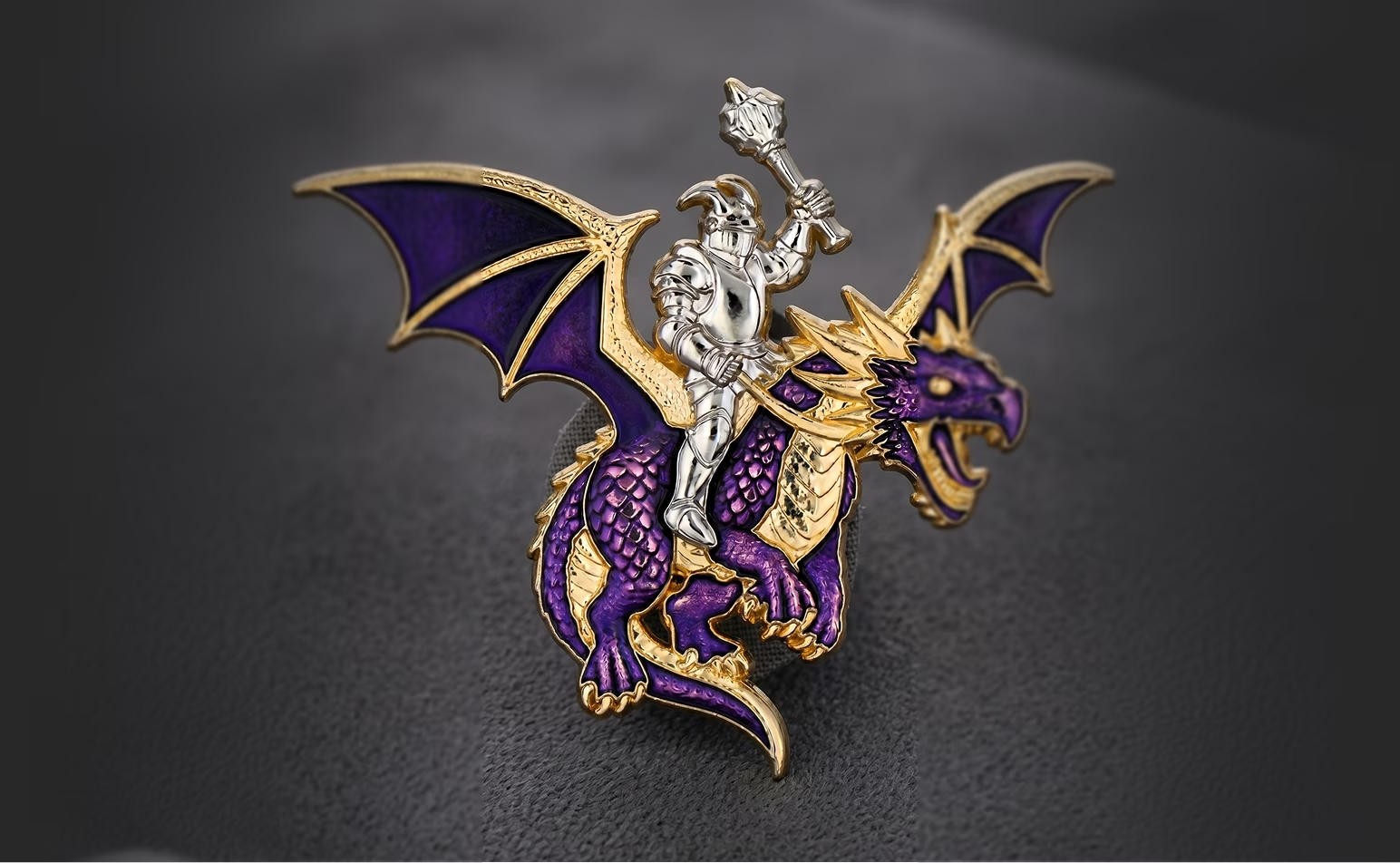
The biggest factor most buyers don’t think about. Two coins can look similar in product photos but feel completely different in hand. Cheap operations use thin metal, lightweight zinc fillers, and minimal plating. Quality manufacturers use solid brass or proper zinc alloy, full-thickness coins, and plating that holds up for years.
The cost difference per coin between cheap materials and quality materials is small, maybe a dollar or two. The difference in how the finished coin feels and lasts is huge.
Plating Thickness
Plating is sold by the micron. A coin with 5-micron gold plating costs more to make than a coin with 1-micron plating, but it holds its finish dramatically longer. The thinner version starts wearing through within months of daily carry, especially on raised details. Buyers who go for the cheapest quote often discover this six months later when the gold is wearing off.
Who’s Running the Company
Most challenge coin manufacturers, including the quality ones, have their physical production overseas. The economics of die-stamping, plating, and hand-applied enamel work make that the standard for the industry. What varies is who’s running the company, who’s managing your project, and where the accountability sits when something goes wrong.
A US-based company with US-based ownership, design, and project management is a different operation than a website that takes US orders and routes everything through anonymous overseas channels with no real oversight. The first model means you’re talking to a real team that owns the relationship from artwork through delivery. The second means you’re often dealing with intermediaries who pass quality issues back and forth without resolution.
When evaluating a manufacturer, look at where the company is based, who’s managing your account, and how communication actually works. Real US-based oversight costs more to operate than pure offshore reselling, and that cost shows up in pricing. What you get for it is responsiveness, accountability, and a team that understands what your design needs to look like.
Whether Design Fees Are Bundled
Some operations advertise low per-coin pricing and then charge separately for artwork, revisions, digital proofs, and design changes. Others bundle all of that into the base price and offer unlimited revisions free of charge. Comparing the headline number alone can be misleading. Always confirm what’s included in the per-coin price.
Tariffs and Material Costs
Material costs for brass and zinc have been volatile in 2026, and tariff changes on imported components have added pressure across the industry. Manufacturers handle this differently. Some absorb the cost short-term to keep advertised pricing stable. Some pass it through immediately. Some adjust prices quietly without explanation. If a quote you got six months ago has changed, this is usually why.
Quality Control and Rejection Rates
Quality manufacturers inspect every coin before shipping and reject pieces with paint bleeds, plating defects, or strike issues. That rejection rate is built into pricing. Cheaper operations ship everything and let the customer sort out the bad pieces. The visible price is lower, but the unseen cost is the percentage of your order that arrives unusable.
The Honest Take
The cheapest quote usually isn’t actually the cheapest order once you factor in material quality, plating durability, design fees, and rejection rates. The most expensive quote isn’t automatically the best value either. Look for transparent pricing, clear inclusions, willingness to explain what drives the cost, and a manufacturer who sets honest expectations about what you’ll get.
How to Get an Accurate Quote
If you want a real number for your specific project rather than an estimate, here’s the information that helps a manufacturer give you an accurate quote on the first pass.
- Quantity. A specific number, not a range if you can avoid it. “100 coins” gets a sharper quote than “between 50 and 200.” If you genuinely don’t know yet, give the range you’re considering and ask for pricing at two or three quantity points so you can see how the math changes.
- Approximate size. 1.5″, 1.75″, 2″, or larger. If you’re unsure, 1.75″ is the most common military and unit coin size and a safe default.
- Design concept. Whatever you have. A polished vector file, a rough sketch on a napkin, a unit logo, or just a description in plain English. Quality manufacturers will turn whatever you give them into production-ready artwork. You don’t need to arrive with finished design files.
- Any specific options you know you want. 3D sculpting, dual plating, edge engraving, epoxy dome, custom shapes, sequential numbering. If you don’t know what you want yet, that’s fine too. A good quote will lay out the standard options and the upgrade options separately so you can decide.
- Your deadline. Custom challenge coins typically take 4 to 5 weeks from artwork approval, plus shipping. If you have a hard deadline like a deployment date, retirement ceremony, or unit anniversary, share it upfront. Manufacturers can usually rush production for an additional fee, but only if they know early.
- Use case (optional but helpful). Telling the manufacturer what the coin is for helps them recommend the right material, size, and finish combination. A coin meant for daily carry has different priorities than a presentation piece for a single recipient. The more context you give, the more useful the recommendation back to you.
You shouldn’t need to provide budget upfront. A quality manufacturer will quote based on your specifications and let you adjust quantities or options if the number comes back outside your range. Manufacturers who ask for your budget first, then quote a number suspiciously close to it, are the ones to avoid.
The Bottom Line
For most buyers ordering quality custom challenge coins from a reputable company, expect to pay around $7 to $12 per coin for typical quantities of 100 or fewer, plus a one-time die fee of roughly $100 to $300 depending on design complexity. Larger orders bring per-coin pricing down significantly. Premium options like 3D sculpting, dual plating, and edge engraving add to the cost.
The numbers you see in competing pricing articles, the $0.64 starting prices and the $2.33 averages, don’t reflect what real military and unit buyers pay for quality coins. They reflect cheaper materials, thinner plating, hidden fees, or operations with no real oversight on what arrives at your door.
Quantity is the biggest single factor in your final cost. Size and complexity are next. The die fee is one-time and reorders of the same design skip it entirely. Beyond those variables, total pricing comes down to who’s running the company, what their quality standards are, and what’s actually included in the per-coin price.
The cleanest way to get a real number for your specific project is simple. Tell us what you’re making, how many you need, and any specifics you’ve decided on. We’ll come back with a clear quote, a breakdown of what’s included, and honest answers about anything you’re not sure about.


