
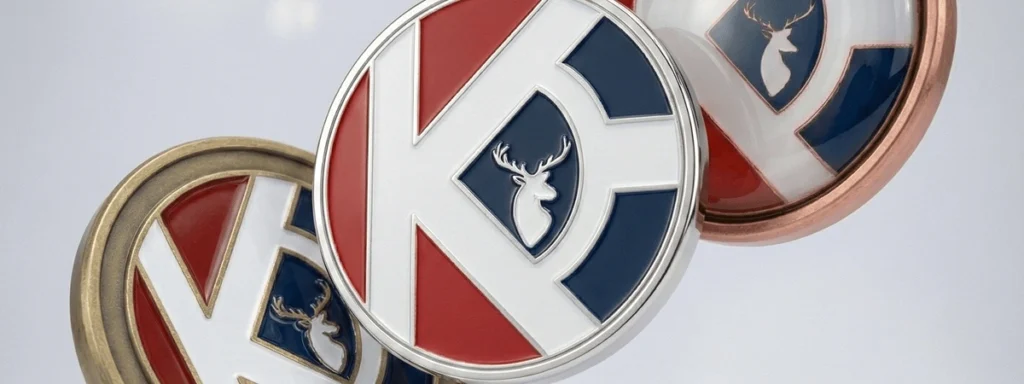
The design is approved, the unit crest looks perfect on screen, but now you have to make the most important manufacturing decision of the entire project: Soft Enamel or Hard Enamel?
If you search online, you will find a lot of conflicting advice. Some sites claim Hard Enamel is “better quality.” Others say Soft Enamel is “traditional.”
At KidderCorp, we have minted millions of coins for every branch of the service, and here is the honest truth: It isn’t about quality. It is about texture.
Both processes use the same high-quality brass or zinc base metals. Both use durable enamel paints. The difference, and the decision you need to make – comes down to how you want the coin to feel in your hand.
The “Touch Test”: What is the Actual Difference?
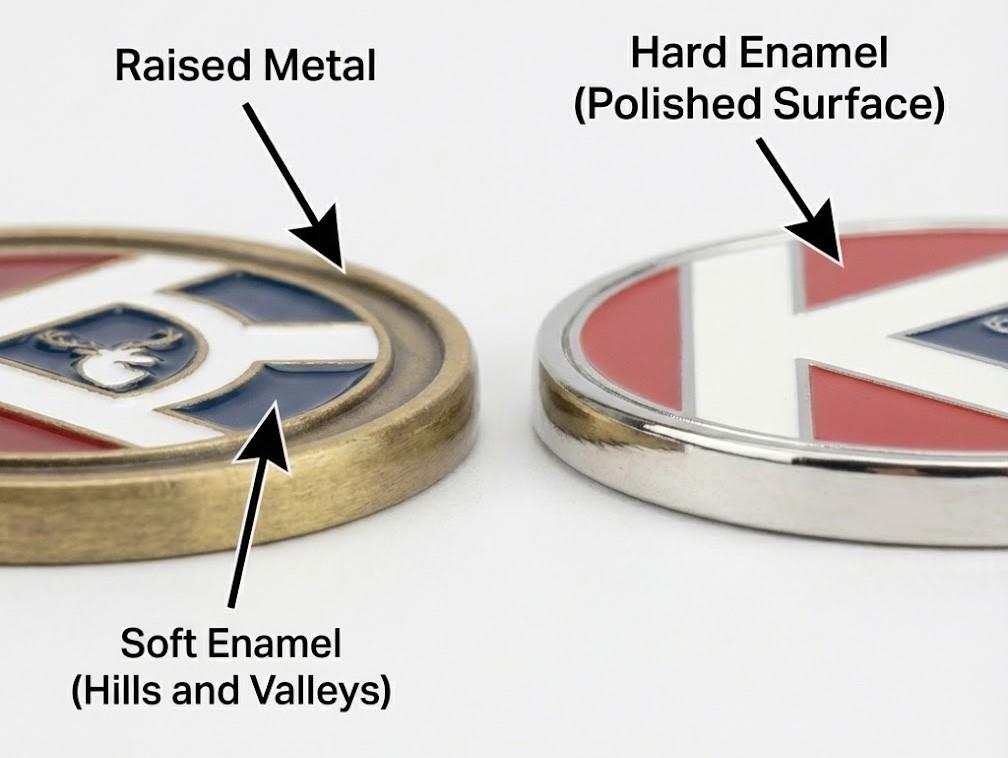
To understand the difference, you have to understand how a coin is built.
Every custom coin starts as a metal die (mold) that stamps your design into raw metal. This stamping creates “raised” metal lines (the borders) and “recessed” areas (the valleys).
- Soft Enamel: We fill the recessed valleys with enamel paint, but we leave the metal borders raised. When you run your thumb over the coin, you can feel the “bump” of the metal lines. It has dimension.
- Hard Enamel: We overfill the valleys with paint and then polish the entire surface flat. When you run your thumb over the coin, it feels completely smooth, like a piece of glass or a high-end poker chip.
Deep Dive: Soft Enamel (The “Tactical” Choice)

Soft Enamel is the industry standard for a reason. In fact, over 90% of the military coins we produce – especially for the Army and Marine Corps, are Soft Enamel.
Why? Because military insignia is all about dimension.
When you look at a Unit Crest or a Rank Insignia, it isn’t flat; it has layers. Soft Enamel allows light to hit those raised metal ridges, creating shadows and depth that make the design pop.
Best For:
- 3D Sculpting: If your design includes a face, a vehicle (like a C-17 or a Tank), or a mascot, Soft Enamel is often required. You cannot polish a 3D sculpt flat without ruining the detail.
- Tactical Finishes: If you want a matte black or “stealth” coin, Soft Enamel is the way to go.
- Texture: If you want the coin to feel like a tool or a piece of gear, rather than a piece of jewelry.
Deep Dive: Hard Enamel (The “Jewelry” Choice)

Hard Enamel (also known as Cloisonné) mimics the look of ancient jewelry. Because the surface is ground down and polished until the paint and metal are perfectly flush, the result is incredibly sleek.
This process signals “prestige.” It reflects light differently, giving the coin a high-value “thud” when placed on a table. It feels dense and refined.
Best For:
- Commander’s Presentation Coins: When an Admiral or General hands a coin to a dignitary, they often prefer the smooth, heavy feel of Hard Enamel.
- Corporate & Safety Awards: For civilian gifts, the smooth finish feels more like a luxury item and less like military gear.
- Simple, Bold Logos: If your design relies on big blocks of color (like a corporate logo or a simple shield), Hard Enamel makes those colors look rich and vibrant.
The “Epoxy” Factor: Protection & Depth

There is a third option that acts as a hybrid: Soft Enamel with an Epoxy Coating.
This is a clear protective layer applied over a Soft Enamel coin. It creates a smooth surface (like Hard Enamel) while protecting the paint and metal underneath from scratches, salt air, or pocket wear. Perfect for coins that will face the rigors of a Coin Check.
At KidderCorp, we apply epoxy in two distinct ways depending on your preference:
- The Thin Coat: A subtle layer that fills the recesses just enough to make the coin smooth and protected, without adding bulk.
- The “Dome” Effect: A thicker application that creates a slight 3D bubble. This magnifies the artwork underneath and gives the coin a unique, liquid-glass appearance.
Summary: Which One Should You Choose?
| Feature | Soft Enamel | Hard Enamel |
|---|---|---|
| Texture | Raised metal ridges (Tactical feel) | Smooth & Polished (Jewelry feel) |
| 3D Capability | Excellent | Limited (Must be flat) |
| Durability | High (Metal is exposed) | Very High (Scratch resistant) |
| Cost | Standard | Premium (Adds polishing labor) |
| Best for | Units, 3D Designs, Mascots | Corporate, Formal Events |
Still stuck? Here is our cheat sheet based on 20 years of orders:
- Choose Soft Enamel If: You are designing a coin for an infantry unit, a CPO Mess, or any design with 3D vehicles/mascots. You want the coin to feel rugged and detailed.
- Choose Hard Enamel If: You are designing a coin for a formal ball, a corporate merger, or a VIP gift. You want the coin to slide smoothly across a table and shine under the lights.
Still not sure? You don’t have to guess. When you start your order with KidderCorp, our artists can show you digital proofs of how your specific design would look in both styles.


